
A front door does several jobs at once. It is the first thing visitors see, it keeps the house secure, and it holds heat in through a Norfolk, Suffolk or Cambridgeshire winter. For most homes the choice comes down to two materials: uPVC or composite.
A uPVC door has a reinforced uPVC frame with an insulated panel in the leaf. A composite door is built from several materials, typically an insulating foam or timber core inside a tough glass reinforced plastic (GRP) skin, with a woodgrain or smooth finish. If you want the detail on how they are made, read our guide what is a composite door?
Both can be a good door. Amber Home Improvements has been fitting doors across East Anglia for 30 years, since 1996, from our Norwich showroom. This guide sets out how the two compare, using three recent Amber front doors as examples.
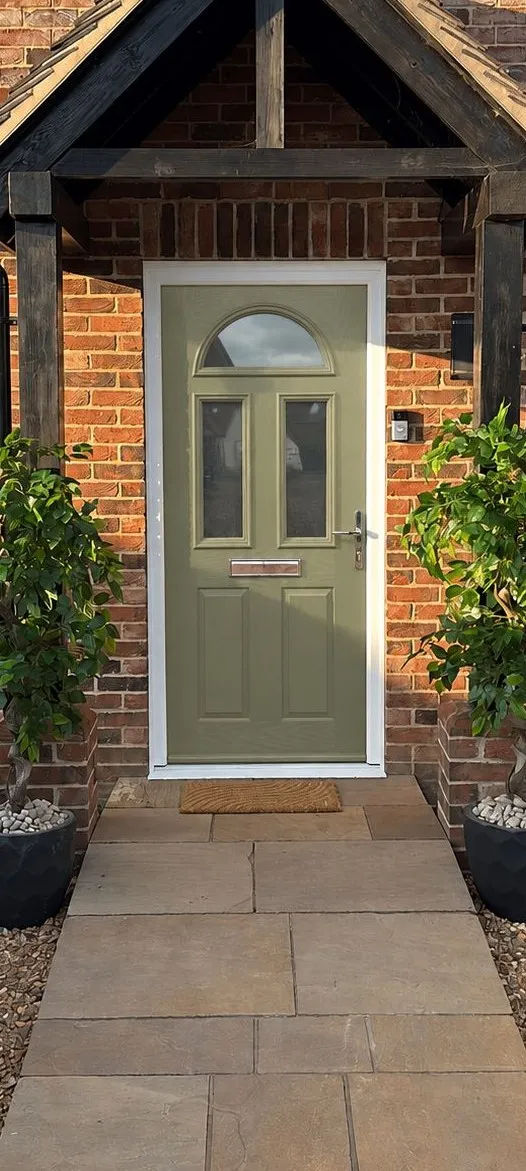
Shropham NR17 – composite to composite, in sage green
On a newer red-brick home in Shropham, south-west of Attleborough, the owners already had a black composite door. It worked, but they wanted a softer colour and more glass. Amber fitted a sage-green composite door in a white frame, with arched top lights, two vertical glazed panels and recessed lower panels.
This door cost £2,250 inc VAT, supplied and fitted. It is a useful benchmark, but every door is priced on survey. Full project: composite front door, Shropham NR17.
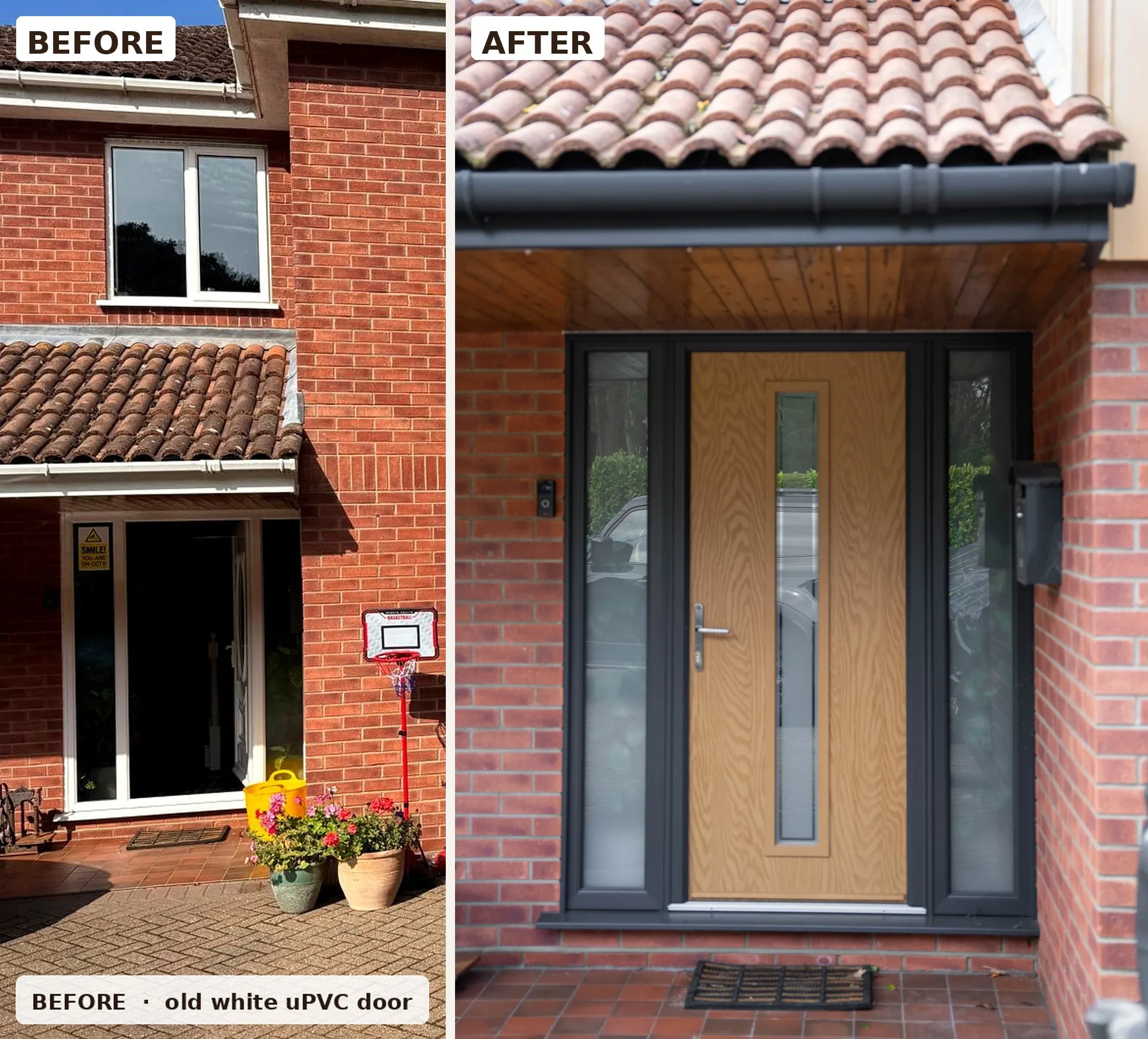
St Olaves NR31 – white uPVC to light oak composite
This St Olaves home, between Great Yarmouth and Beccles, had a standard white uPVC front door with a glass side panel. It still worked, but it looked plain against the red brick and showed a clear view into the hall.
Amber replaced it with a light-oak woodgrain composite door in an anthracite frame, with full-height frosted sidelights either side. The woodgrain finish gives the look of timber without painting. Full project: oak composite front door, St Olaves NR31.
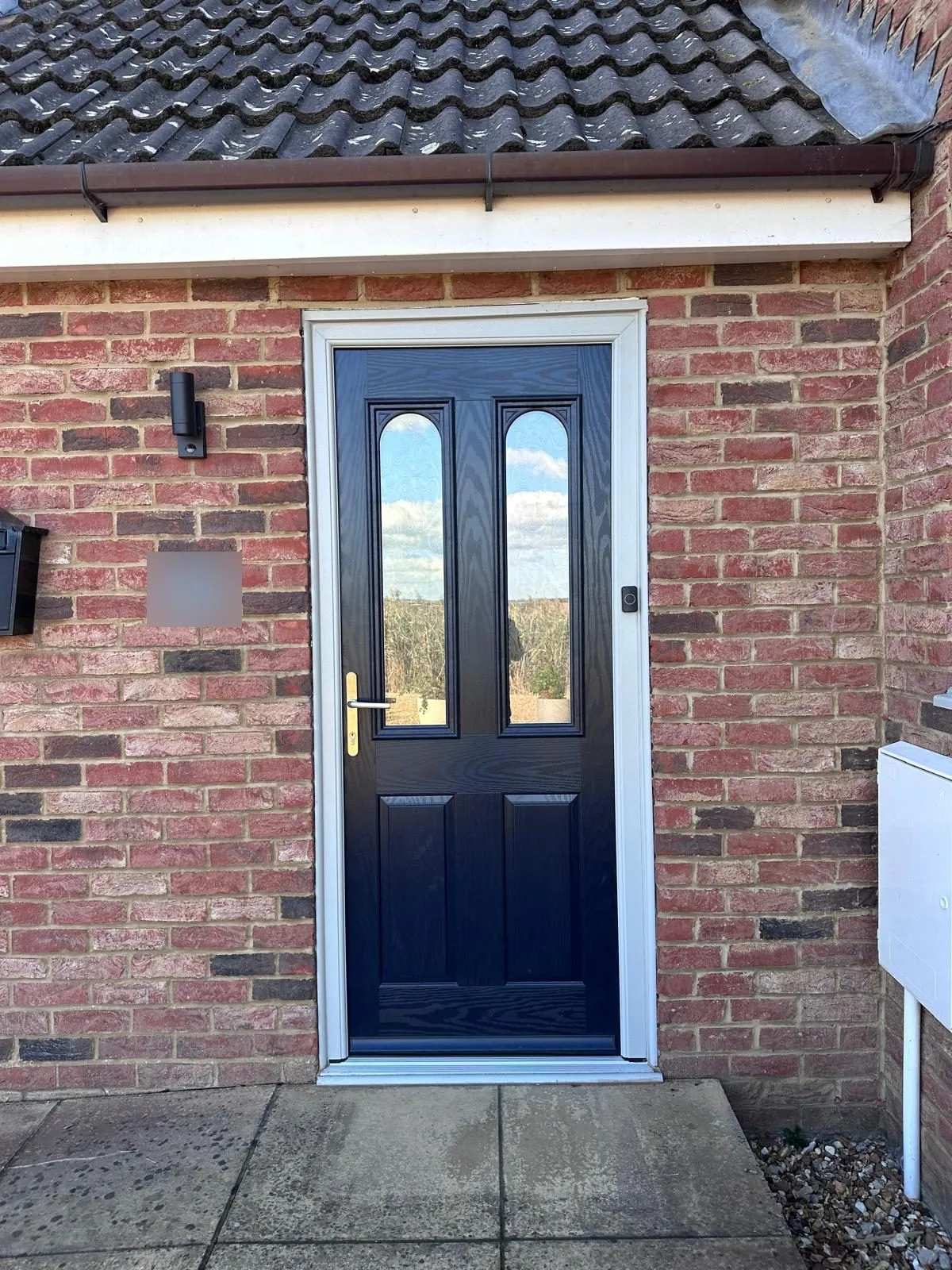
Downham Market PE38 – blue composite in an agate grey frame
On a chalet-style home in the Downham Market area, the front door was part of a whole-house job. The old cottage-style door was replaced with a blue four-panel composite door with two curved glazed top panels, set in an agate grey frame to match the new windows.
The door has a solid foam-filled core, a security cylinder and three heavy-duty hinges, with a low weather-sealed threshold. Full project: agate grey flush windows and a composite door, Downham Market PE38.
Composite vs uPVC: how they compare
Security
Security depends more on the locks, hinges, glass and fitting than on the material alone. The doors we fit have multi-point locking, and anti-snap cylinders and reinforced hinges are available. PAS 24 options are available on selected doors. A composite leaf is usually thicker and more solid than a uPVC panel, which many buyers find reassuring. See our guide to front doors for security.
Insulation
Both types are insulated. A composite door’s foam core helps keep heat in, which is why many owners choose one for an exposed front elevation. A modern uPVC door with an insulated panel can also perform well. The glazing you choose makes a real difference to either, so we go through it on survey.
Looks
Both types come in a range of colours, panel styles and glass. The main difference is how the door is built. A uPVC door has an outer frame, then the door frame (the sash) inside it, with a panel or glass fitted within that sash. You can see those layers from the street. A composite door is a single solid slab, often with a woodgrain finish and moulded or recessed panels, so it looks closer to a traditional timber door.
Flat uPVC panels are usually used for back doors. uPVC front doors are less common, and usually have a styled panel with glazing. The Shropham, St Olaves and Downham Market doors above show the composite look, and on any door the frame colour can be matched to your windows.
Maintenance
Neither needs painting. Composite will not swell, shrink or need painting, and a wash down is usually all it needs. uPVC is similar: an occasional clean of the panel, frame and seals, and a little lubricant on the locks.
Lifespan
Both should last many years when fitted well. Composite doors are often expected to keep their appearance for longer, because the GRP skin resists knocks and fading. How long any door lasts also depends on how exposed it is and how it is looked after. Doors we fit are backed by our 20-Year Product Guarantee.
Cost
A uPVC door usually comes in under £2,000 inc VAT, although the finish and options you choose can move that up or down. A composite door generally costs more. As a real example, the Shropham composite front door cost £2,250 inc VAT. Size, glazing, colour, sidelights and hardware all change the price of either type, so we quote after a free home survey.
Which should you choose?
Choose uPVC if you want a practical, lower-cost door, for example for a back door or a utility entrance, or a styled, glazed uPVC front door where that suits the house.
Choose composite if the door is the main entrance and you want a solid feel, a woodgrain or panelled look, or a stronger colour that matches your windows, as on the three homes above.
Many East Anglia homes have a composite front door and a uPVC back door, and that is a sensible way to spend the budget where it shows. It helps to see and handle both before you decide. You can compare doors side by side at our Norwich showroom.
Frequently asked questions
Is a composite door more secure than a uPVC door?
Security depends mainly on the locks, hinges, glass and fitting. Both types can be fitted with multi-point locking and anti-snap cylinders. A composite leaf is usually thicker and more solid, which many buyers prefer for a front door.
Which is warmer, composite or uPVC?
Both are insulated. A composite door has an insulating foam or timber core, which helps keep heat in. A modern uPVC door can also perform well. The glazing you choose affects either type, so we go through it on survey.
How much does a composite or uPVC front door cost?
A uPVC door usually comes in under £2,000 inc VAT, although finishes and options can move that up or down. A composite door generally costs more. As a real example, a composite front door Amber fitted in Shropham NR17 cost £2,250 inc VAT. Every quote is free and follows a home survey.
Do composite doors need painting?
No. Composite will not swell, shrink or need painting. A wash down is usually all it needs. uPVC doors do not need painting either.
How long does a composite or uPVC door last?
Both should last many years when fitted well. Composite doors are often expected to keep their appearance for longer, because the GRP skin resists knocks and fading. Doors fitted by Amber are backed by our 20-Year Product Guarantee.
What is the difference in how composite and uPVC doors look?
A uPVC door has an outer frame, then the door frame (the sash), with a panel or glass fitted within it, so you can see those layers. A composite door is a single solid slab, often with a woodgrain finish. Both come in a range of colours and styles, and the frame colour can usually be matched to your windows.
Is Amber FENSA registered for replacement doors?
Yes. Amber Home Improvements is FENSA registered for replacement windows and doors and is a GGF member. We have been fitting doors across Norfolk, Suffolk and Cambridgeshire for 30 years, since 1996.
If you are weighing up composite or uPVC for a Norfolk, Suffolk or Cambridgeshire home, book a free, no-obligation home survey, call 01603 672638, or visit the Norwich showroom. Browse our composite doors, uPVC doors, front and back doors in Norwich and the full doors range before you visit.