
An East Anglia Guide
Short answer
Yes. Windows, doors and most conservatory roofs can be replaced in winter.
- Replacement windows and doors are fitted one opening at a time. Each old frame comes out and the new one goes in, fixed and glazed, before the next opening is touched, so your home is not left open.
- Cold on its own rarely stops the work. Frost, heavy rain and high wind can, mainly because sealants and foams need a dry surface and a minimum temperature (around 5°C for many products), and because roof work and large glass need safe, calm conditions.
- A conservatory roof replacement takes longer and depends more on the forecast. We plan it around a dry spell and keep the room closed off from the house while the roof is open.
- Windows, doors and roofs are made to measure. The lead time from order to fitting is typically 4 to 12 weeks, depending on the time of year, product choice and colours, so ordering in winter is a good way to be ready before spring.
Winter fitting at a glance
Yes
Windows, doors and most conservatory roofs can be fitted through an East Anglia winter
1at a time
One opening out, the new frame in and secure, then the next
5°C
A common minimum for many sealants and foams. Check the product used on your job.
4-12weeks
Typical made-to-measure lead time, depending on the time of year, product choice and colours
In this guide
This guide is for homeowners in Norwich, Norfolk, Suffolk and Cambridgeshire who are wondering whether to wait until spring. Amber Home Improvements is an independent Norwich-based company, fitting windows, doors, conservatories and roofs since 1996 (30 years). We are a GGF member, and our work is fitted by our own team.
Can windows and doors be fitted in winter?
Yes. Replacing windows and doors is mostly dry work. The new frames are made to measure in advance, so on the day the job is to take the old frame out, fit the new one, glaze it and seal it. That can be done in cold weather, and in most of an East Anglia winter it is.
What changes in winter is the planning around the work: shorter daylight, more care with the heat in your home, and an eye on the forecast for the few things that do not like wet or freezing conditions.
| Project | Usually fine in winter? | What can hold it up |
|---|---|---|
| Replacement windows | Yes, in most weather | Heavy rain or frost when the outside seal goes on |
| Front and back doors | Yes, usually within a day | Driving rain while the door opening is out |
| Patio, French and bi-fold doors | Yes | High wind when handling large glass panels |
| Conservatory roof replacement | Usually, planned around a dry spell | Rain, wind or ice while the roof is open or the team is working at height |
| New conservatory, orangery or extension | Often, with more planning | Frost and heavy rain during groundworks, concrete and brickwork |
A general guide only. Every home and every forecast is different, and we talk through the plan for your job before the fitting day.
How a winter fitting day works
The question we hear most in winter is "will my house be freezing?" The short answer is no, because the work is done one opening at a time. A typical day looks like this:
1
Protect the room first
Dust sheets go down, furniture near the windows is moved or covered, and the rooms we are working in are closed off where possible so the rest of the house stays warm.
2
One opening at a time
The team takes out one old window or door, prepares the opening and fits the new frame straight away. The next opening is not touched until that one is in and secure.
3
Glazed and closed before moving on
Each new frame is fixed, glazed and closed before the team moves to the next. For most windows that is a matter of hours, not days.
4
Sealed inside and out
The gaps around the frame are insulated and sealed outside and finished inside. If it is too wet or cold for the outside seal to go on properly, the frame is still secure and weathertight for the night, and the seal is finished when conditions allow.
5
Heating stays on
You can usually keep the heating on in the rest of the house. Keep doors to the rooms we are working in shut, and the house holds its heat well.
6
Locked and checked at the end of the day
Before the team leaves, every new window and door is shut, locked and checked, and we tidy up. Your home is never left with an open hole overnight.
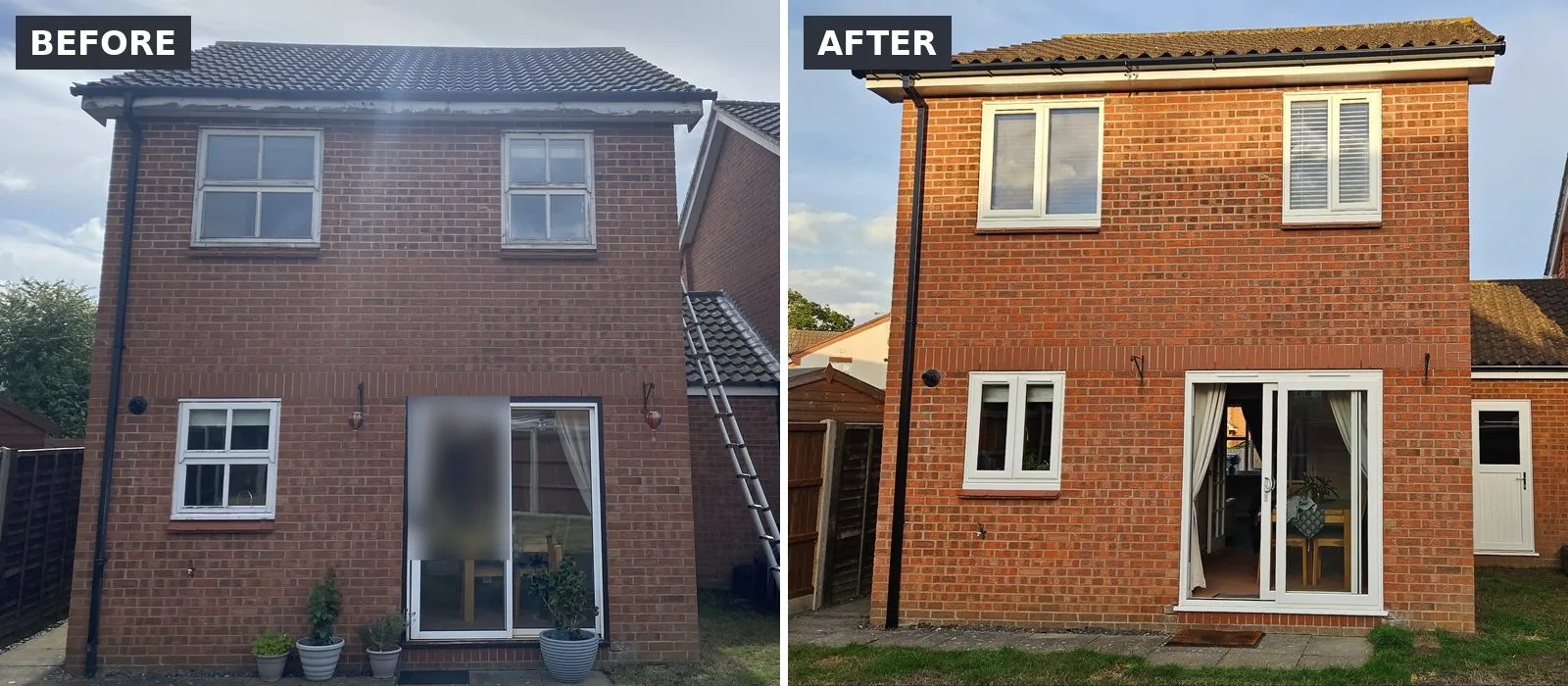
Drayton NR8: new windows and a sliding patio door on the back of the house. See the Drayton project.
On that Drayton job, which also included a composite front door and new roofline, the owners said in their review that the team was on site for under four days. It was fitted in August. In winter the days are shorter, so we plan the same work around the daylight, and a job of that size can take a little longer.
A real winter job: White Lion Street, NorwichDecember to January
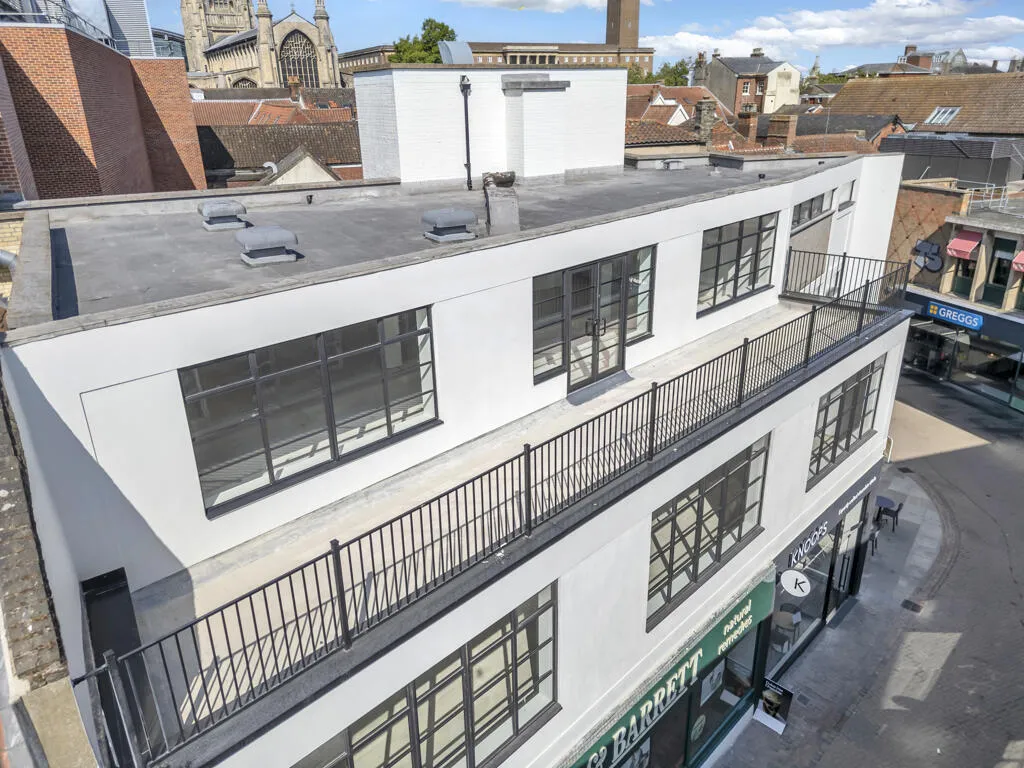
The former Hughes Electrical building on White Lion Street, in Norwich city centre, had been empty and run down for some time. We replaced the outdated windows and doors across three floors with heritage-style aluminium frames and fitted a new aluminium shopfront. The work was fitted between December and January.
FittedDec to JanThrough the winter
Floors3Windows and doors replaced
NowShop + spaRetail below, spa above
The ground floor is now a retail unit, with a spa and cold plunge facility above. Read the White Lion Street project.
When the weather actually matters
Most winter days in Norfolk and Suffolk are fine for fitting windows and doors. These are the conditions that can change the plan:
| Weather | What it affects | What we usually do |
|---|---|---|
| Frost and very cold mornings | Silicone sealants and expanding foams need a minimum temperature, often around 5°C for many products, and a surface free of frost and ice | Start on the warmer side of the house, choose products suited to low temperatures, or finish the outside seal on a milder day |
| Heavy or driving rain | Sealant will not bond well to a wet frame or wet brickwork. Roof work and large openings are exposed | Work between showers, keep each opening short, or move the date for a roof or large door |
| High wind | Handling large glass units, patio and bi-fold door panels, and any work at height or on a roof | Fit smaller openings first, or move the date when it is not safe |
| Snow and ice | Safe access around the house, ladders, scaffold and roofs | Clear and grit the working area, or rearrange the visit |
| Short daylight | How much can be finished safely in one day | Start early and plan the number of openings per day around the light |
If the forecast is against a job, especially a roof or a large door, we would rather talk to you about moving the date than fit it badly. Sealant temperatures are a guide: the right figure is the one on the product used on your job.
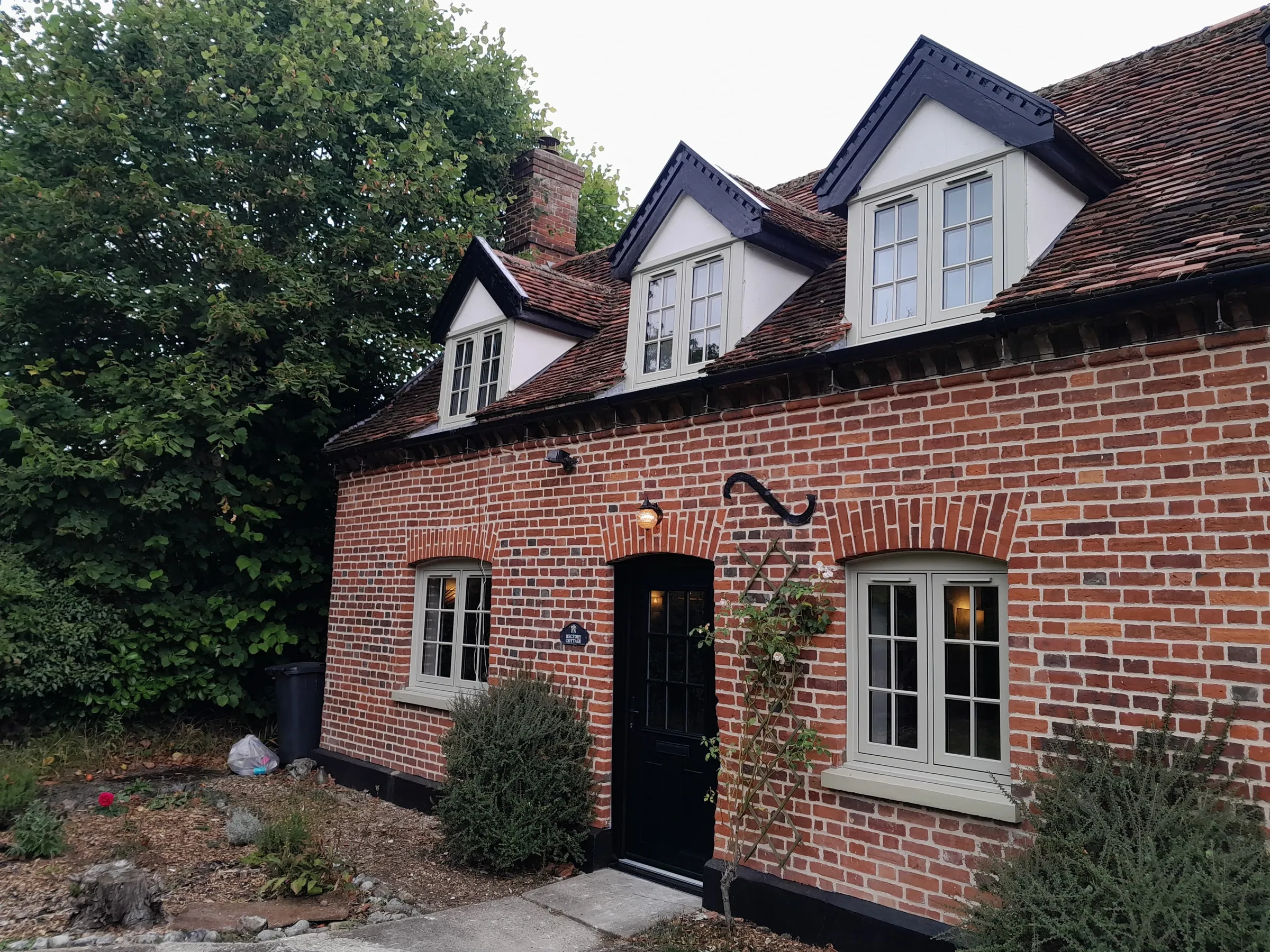
Olive grey flush casement windows on a red-brick cottage in Langham IP31.
Replacing a conservatory roof in winter
Winter is when many people notice their conservatory most, because the room is too cold to use. Replacing the roof is a bigger job than a window, but it can still be done in the colder months with the right planning.
1
Survey and design first
We check the frames, the base and how the room joins the house, and agree the new roof. On survey we also establish the Building Regulations route.
2
Fitting planned around a dry spell
The old roof comes off and the new one goes on in a planned sequence, so the room is open for as short a time as possible. We watch the forecast closely for this part.
3
The house stays closed off
The door between the house and the conservatory stays shut while the roof is open, so the rest of your home keeps its heat and stays dry.
The choice is usually between a modern glass roof and an insulated tiled roof. The insulated tiled roof we fit is the Livin Roof from Ultraframe. Building Regulations: May be required depending on the project; Amber establishes the route and coordinates Building Control where needed.
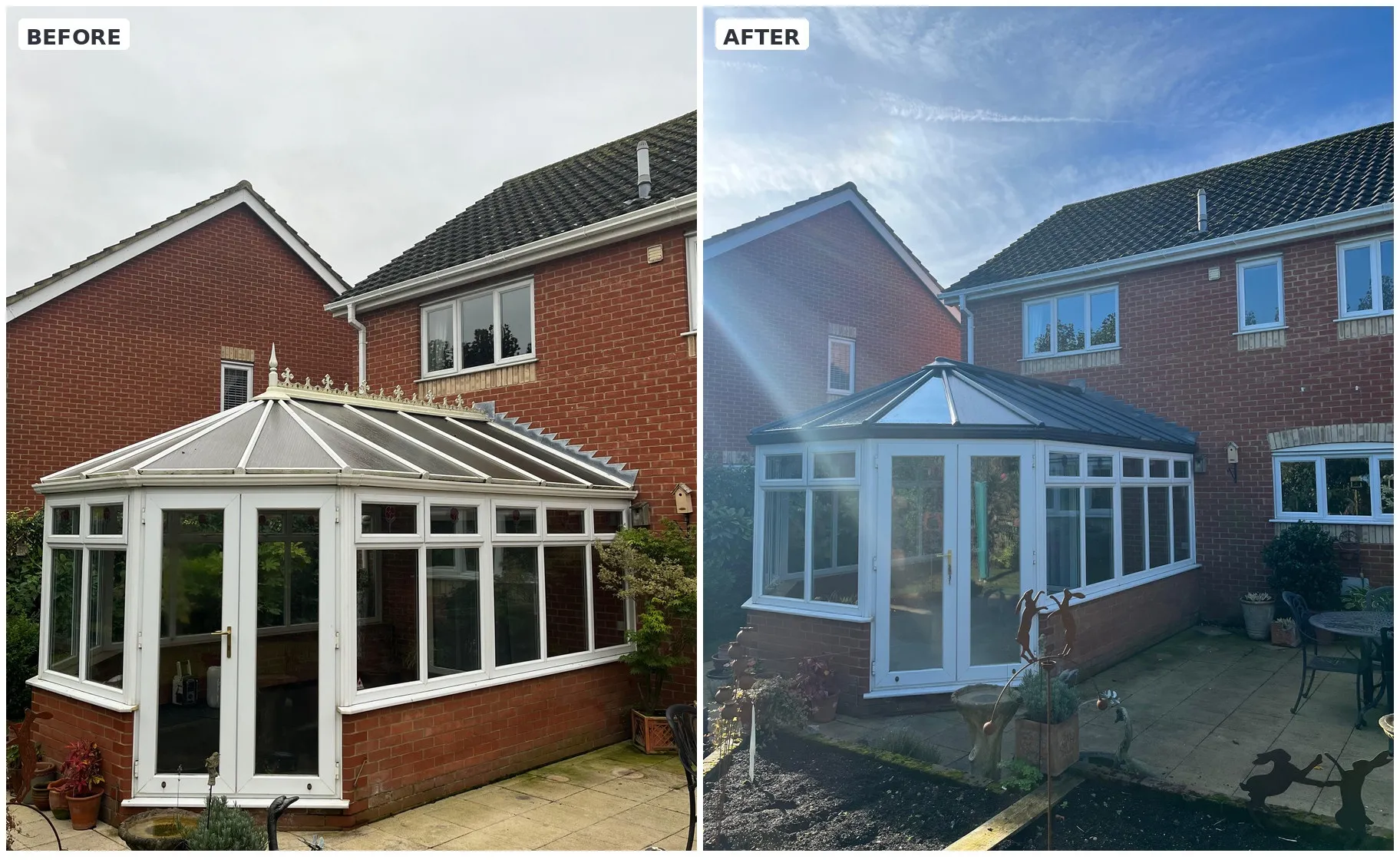
Dereham NR20: an old polycarbonate roof replaced with a modern glass roof. On that job the work on site took around four days, about four weeks after the survey. See the Dereham project.
Read more on our conservatory roofs in Norwich page, and in our guide to why a conservatory gets too cold in winter, which compares an insulated tiled roof, a glass roof and an orangery.
A real job into the colder months: Old Buckenham NR17October to November 2025
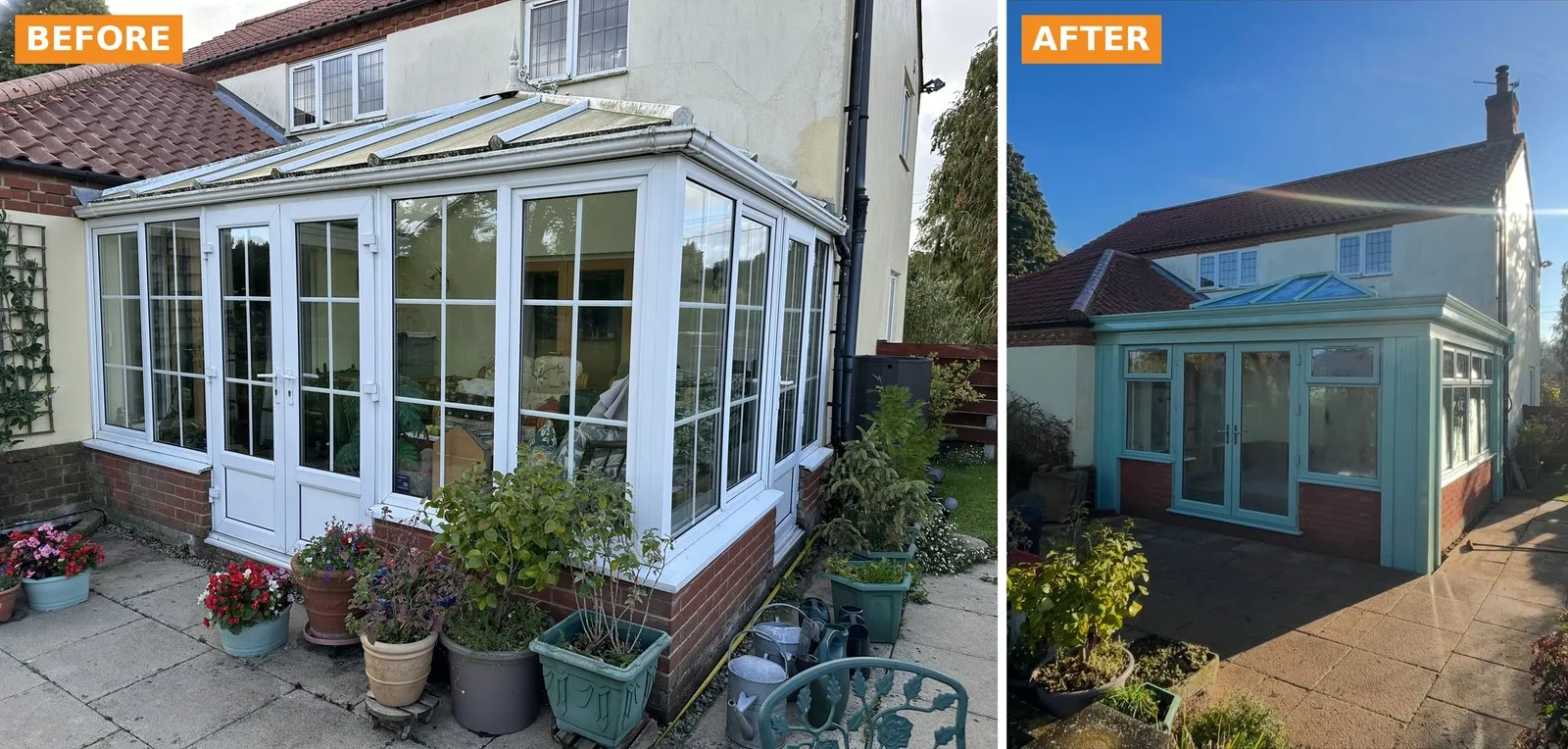
A white uPVC conservatory was taken down and replaced with a Chartwell Green orangery with a glazed lantern. Fitting began on 20 October 2025 and the orangery was finished around four weeks later, in late November 2025.
On siteAbout 4 weeks20 Oct to late Nov 2025
House doorKept in placeProtected during the work
Price£51,890inc VAT, that house only
There was no knock-through, so the existing door between the house and the room stayed in place throughout. Read the Old Buckenham orangery project.
Lead times: why winter is the time to order for spring
Windows, doors and roofs are made to measure for each opening, so there is always a gap between saying yes and the fitting day. Spring and early summer are often the busiest time of year for home improvements, so ordering in winter gives you a better chance of the date you want.
1
Home survey
We measure every opening, look at the condition of the brickwork and frames, and talk through styles, colours and glass.
2
Design and price
You get a written quote, inc VAT, for exactly what was discussed.
3
Made to measure
Once you order, the frames, doors or roof are made for your home. Lead times are typically 4 to 12 weeks, depending on the time of year, product choice and colours.
4
Fitting day
We agree a date with you and plan the work, including the forecast for roof jobs.
As a guide, lead times are typically 4 to 12 weeks, depending on the time of year, product choice and colours. Larger projects such as a conservatory roof, an orangery or an extension can need more time to prepare where planning or Building Regulations steps are involved. We give you an expected timescale when you order.
Condensation and trickle vents after new windows
New windows make a home more airtight. That is good for heat, but it also means moisture from cooking, showers and drying washing has fewer ways out. In winter it shows up first on the coldest surface in the room.
Inside the glass: the air in the room is humid. Use extractor fans, open trickle vents, and air rooms after showers and cooking.
Outside the glass: on new energy-efficient glazing, mist on the outside on a cold, still morning usually means the glass is keeping the heat in. It clears as the day warms up.
Between the panes: the sealed unit has failed. It will not wipe away, and the unit usually needs replacing.
Trickle vents are small, controllable vents in the frame that let a little fresh air in without opening the window. Keep them open in winter rather than shut. Under Approved Document F in England, replacement windows in habitable rooms should not leave a room worse ventilated than before. If the old windows had trickle vents, the new ones should too, and where they had none, vents are often added. We go through ventilation room by room on survey.
Read our guide to condensation on windows and our guide to trickle vents, garages and Part F.
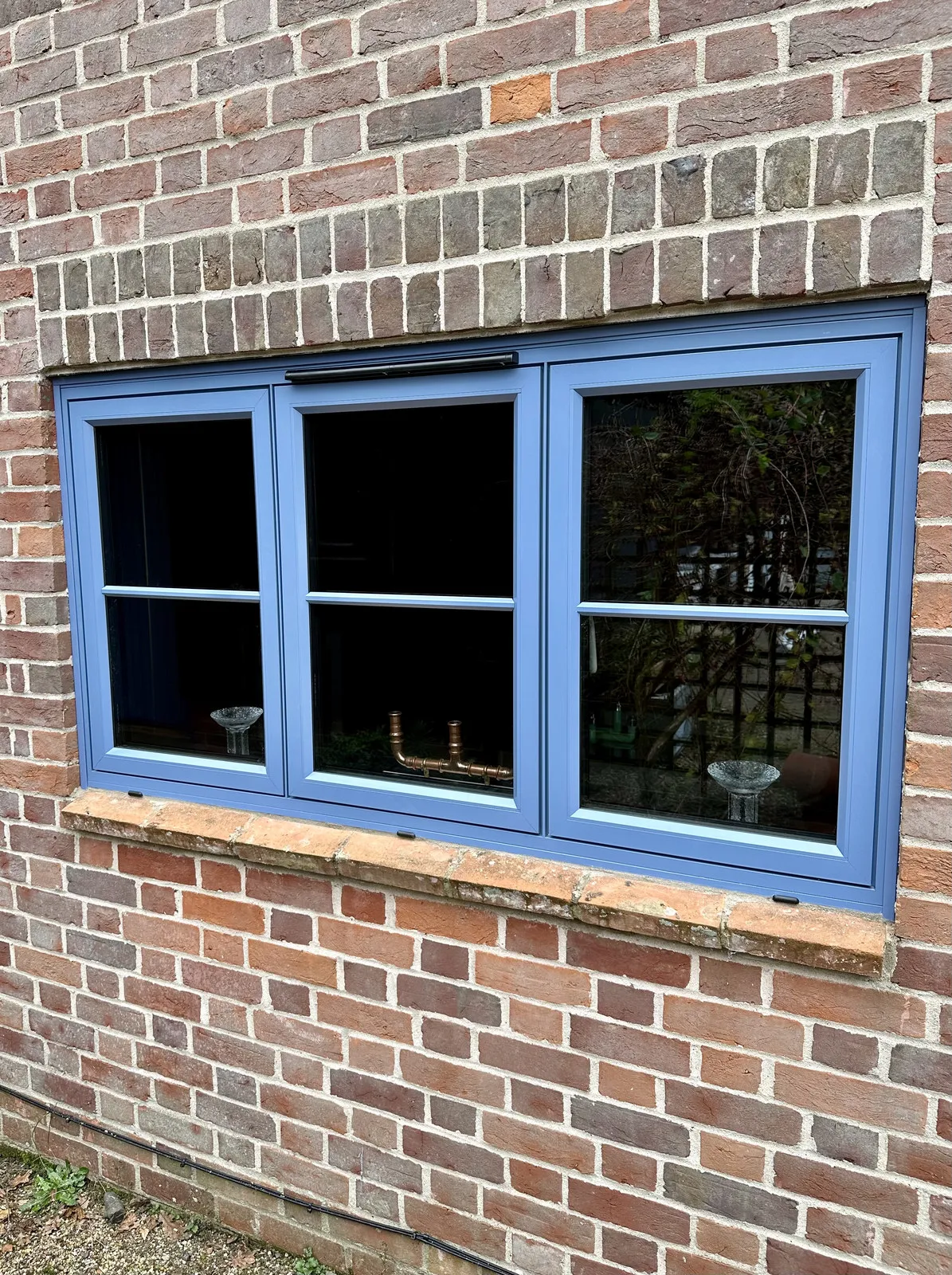
A trickle vent in the frame of an aluminium flush casement window in Mulbarton NR14.
Why booking in winter makes sense
1
You notice the difference straight away
New windows and doors are fitted when draughts and cold glass are most noticeable, so you feel the change for the rest of the winter.
2
Problems are easier to see
Draughts, misted sealed units, condensation and cold spots are at their most obvious in winter, which helps when we survey your home.
3
Ready for spring
With made-to-measure lead times, ordering in winter means your home can be finished before the garden and the warmer months.
4
Time to plan the bigger jobs
For a conservatory roof, an orangery or an extension, winter is a good time for the survey, design and any Building Regulations steps, so the work is ready to go.
Before your winter fitting day: a checklist
A few things that make the day quicker and keep the house warmer.
- Clear window sills and move furniture about a metre back from the windows and doors being replaced.
- Take down curtains, blinds and poles if you would like to put them back yourself.
- Plan where pets will be, away from open doorways.
- Leave parking and access near the house for the van, and clear paths of ice where you can.
- Keep the heating on in the rest of the house and the doors to work rooms shut.
- Check that your alarm sensors on doors and windows can be disconnected and refitted.
- For a conservatory roof, empty the room and agree the dry-weather plan with us.
Winter window, door and roof fitting: frequently asked questions
Can new windows be fitted in winter?
Yes. Replacement windows can be fitted in most winter weather. Each opening is done one at a time, so the old frame comes out and the new one goes in, fixed and glazed, before the next is started. Heavy rain, frost or high wind can mean adjusting the plan, mainly for the outside seal and for large glass units.
Will my house be cold while the windows are being replaced?
Not for long. Only one opening is out at a time, usually for a short while, and the doors to the rooms we are working in can be kept shut so the rest of the house stays warm. You can normally keep the heating on, and every window and door is shut and locked before the team leaves at the end of the day.
What weather stops a window or door installation?
Cold on its own rarely does. Frost and very low temperatures can affect sealants and foams, which often need around 5 degrees C or more and a dry surface, depending on the product. Heavy or driving rain, high wind and snow or ice can also mean moving a date, especially for large doors, roof work or anything at height.
Can a conservatory roof be replaced in winter?
Usually, yes, with more planning than a window. The roof is fitted in a planned sequence around a dry spell, so the room is open for as short a time as possible, and the door between the house and the conservatory stays shut while the work goes on. We watch the forecast closely and will talk to you about moving the date if it is not suitable.
Do I need Building Regulations approval for a new conservatory roof?
May be required depending on the project; Amber establishes the route and coordinates Building Control where needed. It depends on things like the type of roof and how the room is separated from the house, and we explain the route for your conservatory at the survey.
How far ahead should I book to have work done before spring?
Windows, doors and roofs are made to measure, and lead times are typically 4 to 12 weeks, depending on the time of year, product choice and colours. Spring is often a busy time, so ordering in winter gives you a better chance of the date you want. Larger projects can need more time where planning or Building Regulations steps are involved. We give you an expected timescale when you order.
Why are my new windows getting condensation?
Condensation on the inside of the glass usually means the air in the room is humid, which shows up more in a better-sealed home in winter. Extractor fans, open trickle vents and airing rooms after cooking and showers help. Mist on the outside of new glazing on a cold morning usually means the glass is keeping heat in. Mist between the panes means the sealed unit has failed.
Do replacement windows need trickle vents?
Often, yes, in habitable rooms. Under Approved Document F in England, replacement windows should not leave a room worse ventilated than before. If the old windows had trickle vents, the new ones should have controllable vents that are no smaller, and where there were none, vents are often added. A garage used only as a garage is treated differently. We check ventilation room by room on survey.
Thinking about new windows, doors or a conservatory roof this winter?
Book a free home survey and we will measure up, talk through the options and explain how the fitting day would work for your home, with no obligation.
Or call 01603 672638. Our Norwich showroom is at Unit 52, Hellesdon Park Road, NR6 5DR. See our windows and doors.