
Autumn and winter bring condensation on windows to a lot of Norfolk, Suffolk and Cambridgeshire homes. Damp, mild air off the coast and the Broads, cold clear mornings, and families cooking, showering and drying washing indoors all add moisture to the air, and the coldest surface in the room is usually the glass.
Condensation is not always a fault. Where it forms tells you a lot. Water on the outside of new glazing is usually a sign the window is keeping heat in. Water on the inside is about humidity and ventilation in the room. Mist between the panes of a double or triple glazed unit means the seal has failed, and no amount of wiping will clear it.
What causes condensation on windows?
Warm air holds more water vapour than cold air. When warm, moist air from a kitchen, bathroom or bedroom meets a cold surface, it cools and the vapour turns back into water droplets. It is the same thing you see on a glass of cold drink on a warm day.
Windows are usually the coldest surface in a room, especially single glazing or older double glazing, so that is where droplets show first. Older East Anglia homes used to lose moisture through open fireplaces, air bricks and gappy frames. Better-sealed homes keep heat in, but they also keep moisture in unless there is a route for it to escape. Condensation can be kept low, but in a lived-in home it is rarely gone for good.
Amber Home Improvements has been fitting windows across East Anglia for 30 years, since 1996, from our Norwich showroom, and condensation is one of the questions we are asked about every autumn. This guide sets out what to look for and what to do.
Condensation inside vs outside the glass
On the inside of the window
Droplets on the room side of the glass, often worst first thing in the morning in bedrooms, kitchens and bathrooms, mean the air indoors is humid and the inner pane is cold. It is the type that can lead to black mould on frames, sills, reveals and nearby walls if it is left. The fixes are mostly about moisture and ventilation, covered below.
On the outside of the window
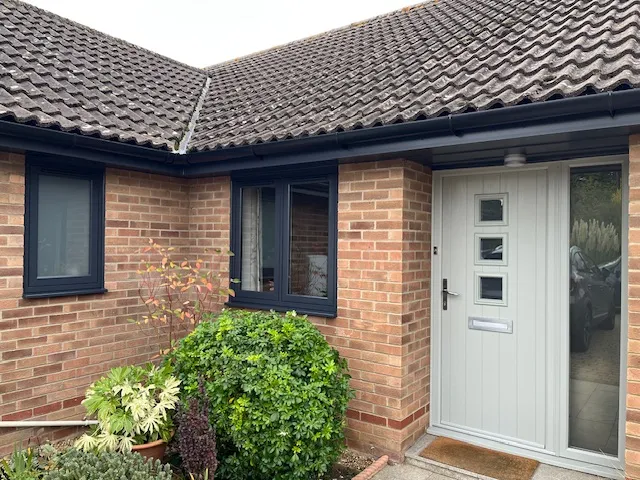
Condensation on the outside of new A-rated windows with low-E glass, often on clear, still mornings in spring and autumn, is usually a good sign. A-rated frames are Amber’s standard specification, so it is worth knowing about if you have new Amber windows. The glass is keeping so much heat inside that the outer pane stays as cold as the air outside, so dew forms on it just as it does on a car windscreen or a lawn. It normally clears once the sun or a breeze reaches the glass. These grey flush casements on a bungalow in Wymondham NR18 are a typical example of modern glazing that can mist on the outside on a cold morning.
Condensation between the panes: a failed sealed unit
If the mist is inside the glass, so you cannot wipe it from either side, the seal around the double or triple glazed unit has failed. Moist air has got into the gap between the panes, and the unit will usually look cloudy or streaky from then on. The glass is no longer insulating as it should.
Where the frames are sound, the usual fix is to replace the sealed unit rather than the whole window. A new unit is made to measure and fitted into the existing frame.
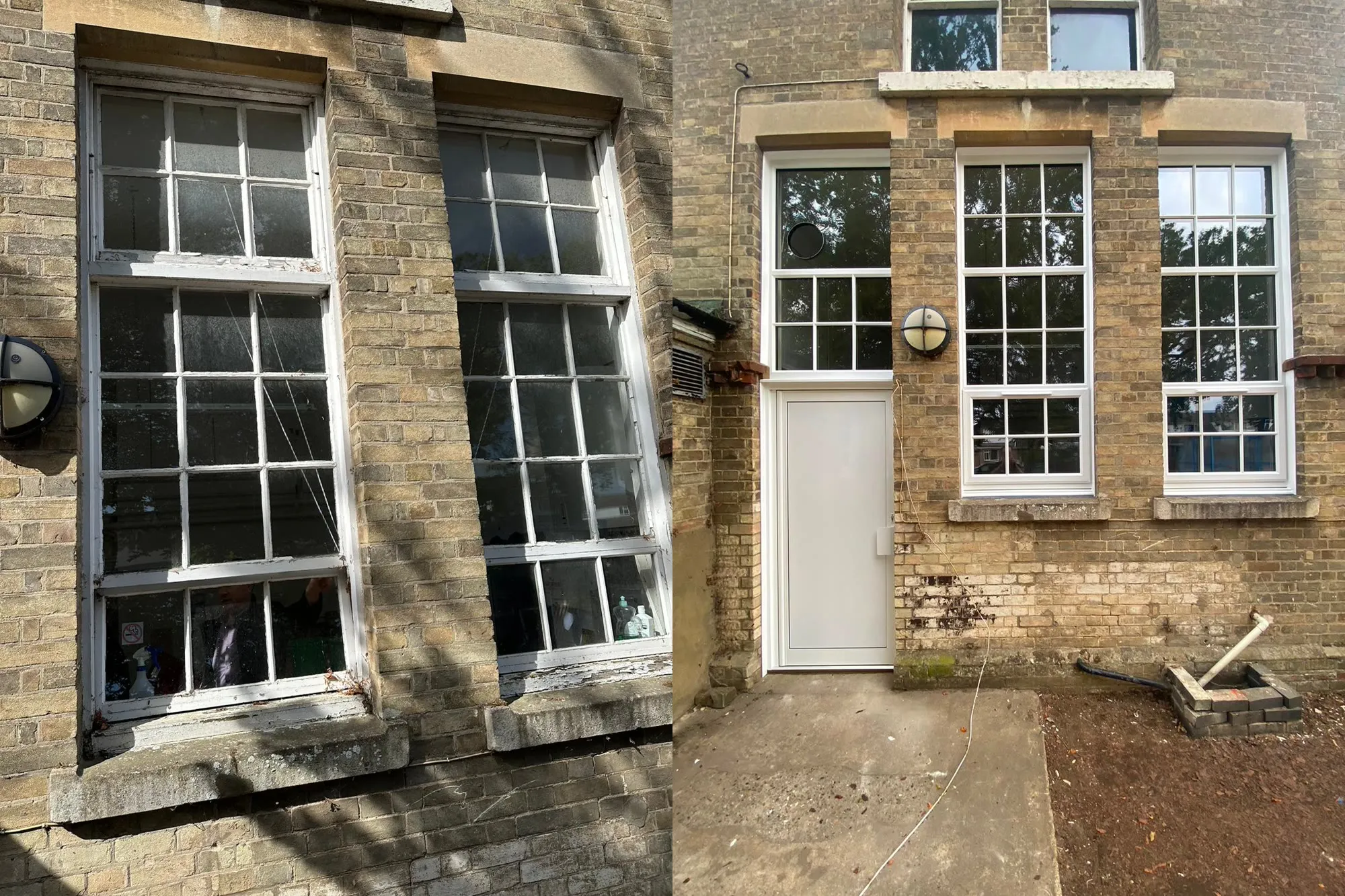
Where the frames are rotten, draughty or the hinges and locks are worn, new windows are usually the better spend. At Horsford CofE Primary School NR10, the old timber windows had peeling paint, rotted cills and blown glazing, so replacing individual units would not have solved the problem. If Amber fitted your windows, request a service call and we will take a look.
Ventilation, extractor fans and trickle vents
Ventilation lets moist air out before it reaches the glass. Three things help:
Extractor fans in kitchens and bathrooms remove steam at the source. Run them while you cook or shower and for a while afterwards. If a kitchen or bathroom has no fan, it is worth having one fitted.
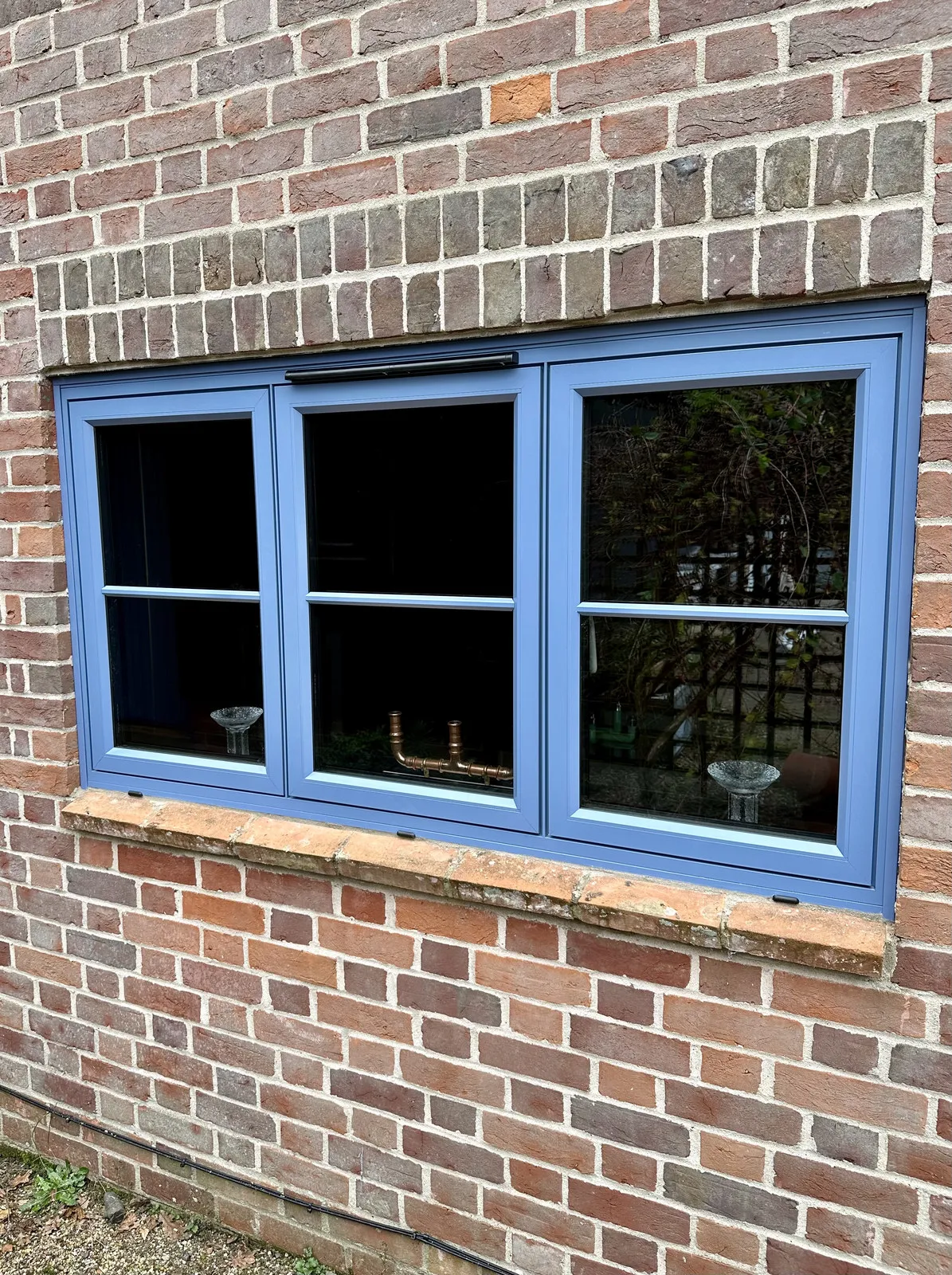
Trickle vents are small, controllable vents in the window frame, like the one on these aluminium flush windows in Mulbarton NR14. They give a steady trickle of fresh air without opening the window. Keep them open in winter rather than shut.
Opening windows for a few minutes, especially after a shower or when drying washing, clears moist air quickly.
Ventilation is also a Building Regulations point. Under Approved Document F in England, replacement windows in habitable rooms should not leave the room worse ventilated than before. If the old windows had trickle vents, the new ones should have controllable vents no smaller. If they had none, background ventilation is often added. Our guide to trickle vents, garages and Part F explains how this works, and the full Approved Document F is on GOV.UK. We go through ventilation room by room on survey.
How to reduce condensation on the inside of your windows
These steps cost little or nothing and make a real difference through a Norfolk or Suffolk winter:
- Ventilate after steam. Use extractor fans, open a window after showering or cooking, and keep kitchen and bathroom doors closed so steam does not drift into colder rooms.
- Put lids on pans and use the cooker hood.
- Dry washing outside when the weather allows. Drying clothes on radiators adds a lot of moisture to a room. If you need to dry indoors, use one room with the door shut and a window or trickle vent open, or a vented tumble dryer.
- Keep the heating low and steady in cold weather rather than letting rooms get very cold and then heating them quickly. Warmer surfaces mean less condensation.
- Use a dehumidifier in rooms that stay damp, such as a bedroom with a lot of glass or a ground-floor room facing north.
- Wipe the glass and sills each morning in winter with a cloth or window vac, so water does not soak into frames, sills and plaster.
- Let air reach the glass. Heavy curtains or blinds tight to the window trap cold, still air against the glass. Open them in the day, and keep large furniture slightly away from cold outside walls.
When condensation turns into damp and mould
Watch for black spots on the silicone, frames or sills, mould in the corners of the reveals, peeling paint or a musty smell. Damp and mould can affect health, particularly for children, older people and anyone with breathing problems. GOV.UK has guidance on the health risks of damp and mould. Clean mould off early, and if it keeps coming back, look at ventilation and the windows themselves.
New conservatories, extensions and garage conversions
A newly built room needs time to dry out. Concrete bases, brickwork and plaster all hold water, so extra condensation for the first few weeks is normal, and it can take up to around 12 weeks, longer in winter. Gentle heat and good ventilation help it clear.
When new windows help with condensation
If you still have single glazing, or double glazing from the 1980s or 1990s, the inner pane runs much colder than modern glass, so condensation forms more easily. Replacing them raises the temperature of the inside pane and cuts draughts, which usually means less condensation on the inside of the glass.
The windows Amber fits are A-rated as standard, in the frame and the glass together. Modern glazing uses low-E coated glass, gas-filled cavities and warm-edge spacer bars, which keep the edge of the glass warmer too. That is where condensation and mould often start on older units. Replacement windows in England also have to meet Approved Document L energy standards, for example a whole-window U-value of around 1.4 W/m²K. Our guides to U-values and energy efficient windows explain the numbers, and Approved Document L is on GOV.UK.
New windows are only half the answer, though. A better-sealed home needs good ventilation, which is why the windows we fit include trickle vents where the room needs them, as on the triple glazed flush windows near Downham Market PE38, which have colour-matched trickle vents and warm-edge spacer bars.
Real Amber window replacements across East Anglia include olive grey flush windows in Langham IP31, where tired timber casements with worn seals were letting cold draughts in, and the flush window upgrade in Filby NR29. Choices include flush casement windows, uPVC windows, aluminium windows, sliding sash windows and tilt and turn windows. If you are in or around the city, see our replacement windows in Norwich page.
Amber is a GGF member, and the windows we fit are backed by our 20-Year Product Guarantee.
Frequently asked questions about condensation on windows
Why do I get condensation on the inside of my windows?
Condensation forms on the inside of windows when warm, moist air in the room meets cold glass. Cooking, showering, drying washing indoors and breathing all add moisture. Better ventilation, steady heating and wiping the glass each morning all help, and older single or double glazing makes it more likely because the inner pane is colder.
Is condensation on the outside of new windows a problem?
Usually not. Condensation on the outside of new A-rated windows with low-E glass is a sign the glazing is keeping heat inside, so the outer pane stays as cold as the air outside. It tends to appear on clear, still mornings in spring and autumn and normally clears once the sun or a breeze reaches the glass.
What does condensation between the panes of glass mean?
Mist between the panes means the seal on the double or triple glazed unit has failed and moist air has got into the gap. It cannot be wiped away from either side, and the unit will not insulate as it should until it is replaced.
Can I replace just the glass instead of the whole window?
Often, yes. Where the frames, hinges and locks are sound, replacing the misted sealed unit is usually the sensible fix. If the frames are rotten, draughty or worn, new windows are usually the better spend. We can advise on a free survey.
Do trickle vents help with condensation?
Yes. Trickle vents let a small, steady flow of fresh air into the room, so moist air can escape before it settles on the glass. They should be left open in winter, together with extractor fans in kitchens and bathrooms. Replacement windows in habitable rooms in England should not leave the room worse ventilated than before.
Will new double or triple glazing stop condensation?
New glazing usually reduces condensation on the inside, because the inner pane stays warmer and draughts are cut. The windows Amber fits are A-rated as standard. It will not stop it completely if the room is very humid, and you may see some condensation on the outside of the glass, which is normal. Good ventilation is still needed.
Why is there condensation in my new conservatory or extension?
A newly built room has a lot of water in its base, brickwork and plaster, which needs time to dry out. Extra condensation for the first few weeks is normal and can take up to around 12 weeks to settle, longer in winter. Gentle heat and good ventilation help.
If condensation, misted units or draughty frames are a problem in your Norfolk, Suffolk or Cambridgeshire home, book a free, no-obligation home survey, call 01603 672638, or visit our Norwich showroom at Unit 52, Hellesdon Park Road, NR6 5DR. You can also download our free condensation guide and browse the full windows range.