
Aluminium vs uPVC windows is one of the comparisons we’re asked about most often in our Norwich showroom. The honest answer is that neither material wins everywhere. Aluminium and uPVC each have jobs they do best, and the right choice depends on your home, your budget and the look you want.
The short version: uPVC windows usually win on cost and on proven thermal performance for everyday window replacements. aluminium windows usually win where you want the slimmest frames, the most glass, or a crisp modern colour on a large opening. Below we compare the two point by point, then show which material we actually chose on five recent Amber jobs, and why.
Looks and Sightlines: Where Aluminium Wins
Aluminium is strong enough to hold large panes in a slim frame, so more of the opening is glass. That’s why it suits contemporary homes, wide openings, gable glazing and big garden elevations. Powder-coated colours such as anthracite give a crisp, modern finish.
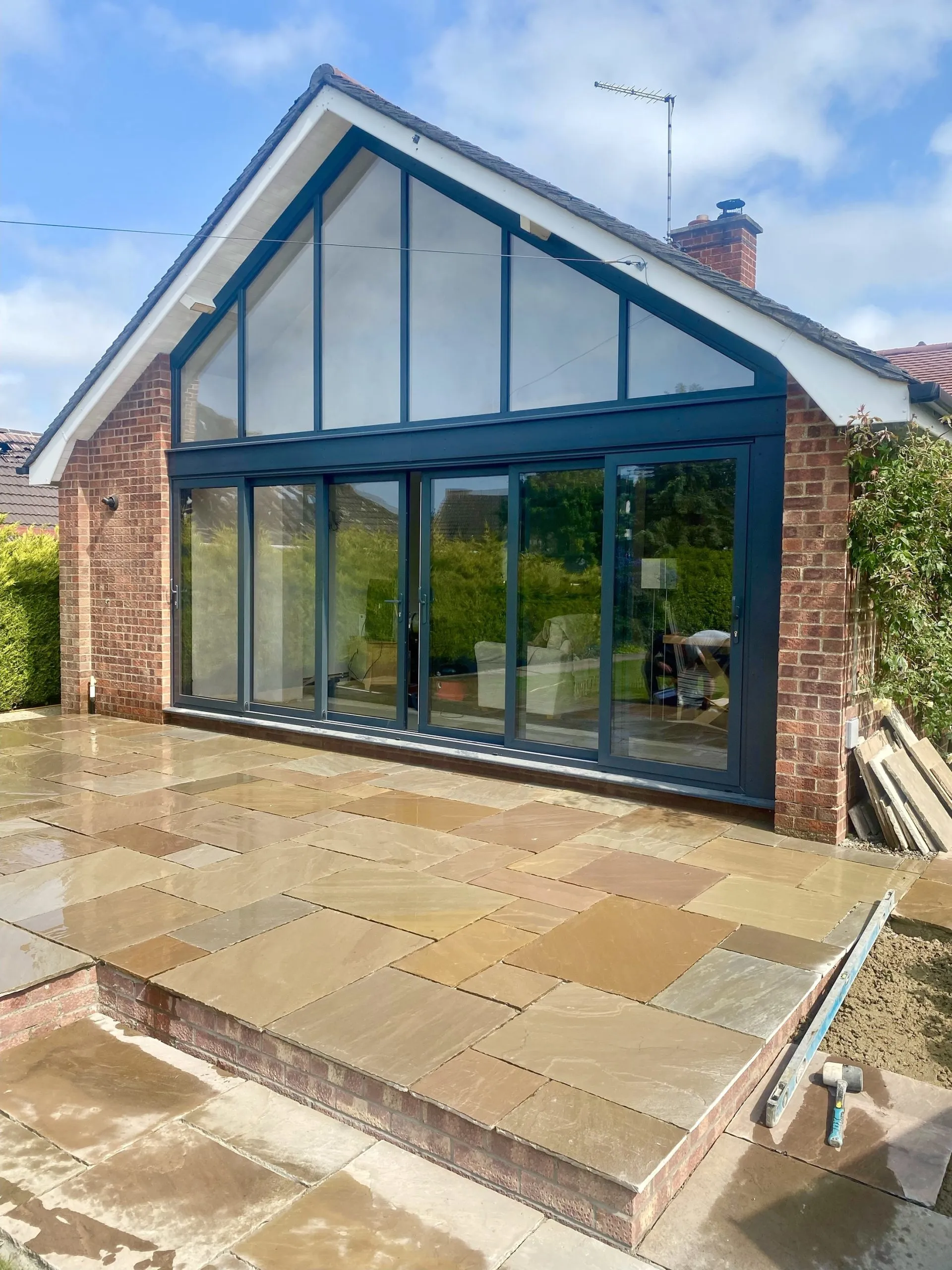
On a bungalow gable in Blofield, NR13, we replaced a white uPVC window in a rendered panel with a full-height anthracite aluminium gable: a triangular window above sliding patio doors, with the mullions lined through so the whole elevation reads as one opening.
uPVC has the edge for traditional and cottage-style homes. Woodgrain foils, sculptured profiles and flush casement windows give a convincing timber look without the repainting.
Lifespan and Maintenance
Both materials are low maintenance compared with painted timber. Neither needs painting: a wipe-down with warm soapy water, an occasional check of the seals and a little lubrication on the hinges and locks is usually all that’s needed.
Aluminium’s factory powder-coated finish holds its colour well and the frame is very rigid, which is why it’s often chosen for large or heavily used openings. Good-quality uPVC is also long-lasting and weather resistant. The bigger risk with uPVC is buying a cheap, thin profile, so it’s worth asking what you’re getting.
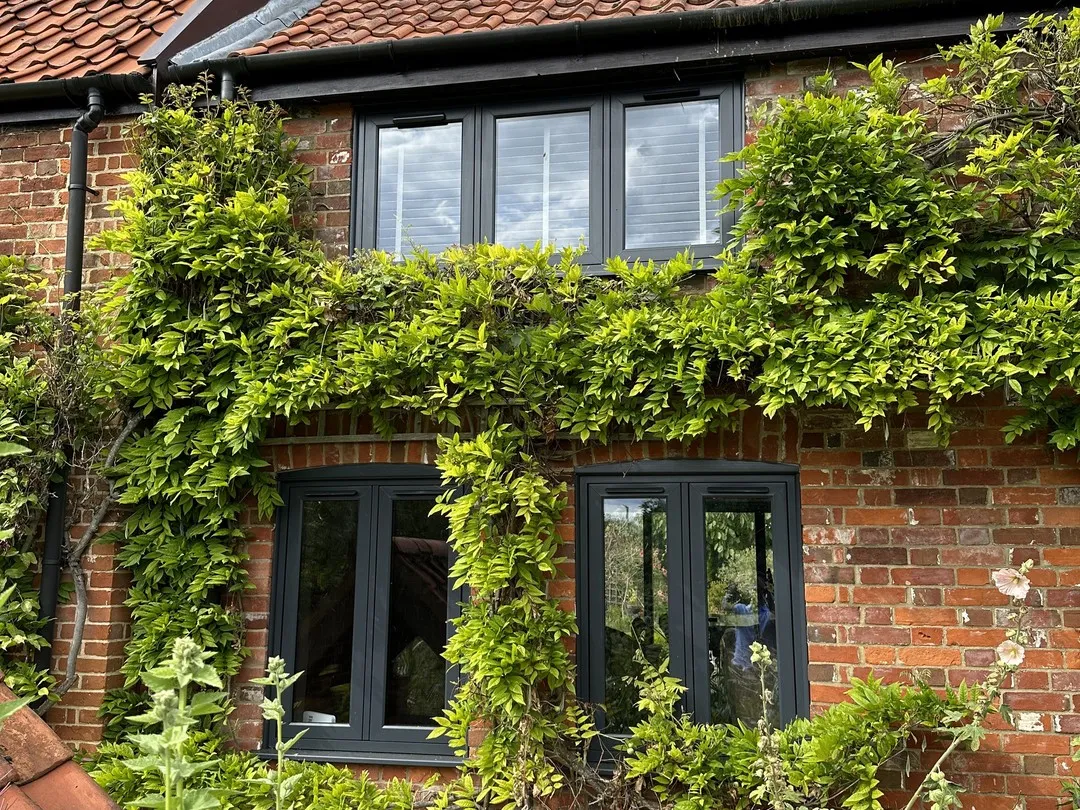
On a renovated farmhouse in Welborne, NR20, sage-green timber casements and an older timber glazed bay were replaced with anthracite grey French flush casements and a floor-to-ceiling aluminium curtain wall onto the garden. It’s a good example of using each material where it’s strongest, all in one colour.
Thermal Performance and Security
Our uPVC windows have confirmed figures: a BFRC A+ Window Energy Rating, a U-value of 1.3 W/m²K, 28mm argon-filled double glazing and 14-chamber frame construction. Triple glazing is also available.
Modern aluminium is thermally broken and can perform well, but the figure depends on the system and the glass build, so we confirm it on survey rather than quote a single number. For example, our Mulbarton aluminium flush project quotes a guide U-value of 1.6 W/m²K for the standard glass build.
For security, our uPVC windows offer up to 9-point locking with high-compression hinge bolts. Our aluminium windows use a multi-point lock and anti-crowbar hinge technology. Either way, the exact hardware is set on survey.

Cost: What Do Aluminium and uPVC Windows Cost?
uPVC is usually the more affordable choice, and aluminium usually costs more for a similar opening. Every Amber price is a fixed quote including VAT, given after a free home survey. Cost is often the deciding factor with aluminium vs uPVC windows, so here are three recent uPVC project examples:
- White triple-glazed package: £20,046 inc VAT. 15 white uPVC windows, one set of French doors and one single uPVC door, all triple glazed.
- White woodgrain package: £11,251 inc VAT. 8 double-glazed windows, one uPVC sliding patio door and one single uPVC door, all in white woodgrain.
- Anthracite grey package: £9,410 inc VAT. 9 anthracite grey casement windows and 2 uPVC doors. This figure excludes the composite door, cladding, roofline and other works completed as part of the wider project.
Why prices vary: window size, opening configuration, number of opening sashes, glazing specification, colour or foil, door types and access can all materially affect the final price. These are genuine recent Amber project costs, not a fixed price per window. Aluminium is quoted the same way, after survey, because size, colour and layout change the figure.
Aluminium vs uPVC at a Glance
Here’s a quick side-by-side summary of aluminium vs uPVC windows, based on the products we survey, supply and fit.
| uPVC windows | Aluminium windows | |
|---|---|---|
| Cost | Usually the more affordable option | Usually costs more for a similar opening |
| Look | Woodgrain foils and flush casements give a timber look | Slimmest frames, most glass, crisp modern colours |
| Best for | Everyday replacements, cottages, period and traditional homes | Contemporary homes, wide openings, gables and glazed walls |
| Thermal | A+ rated, U-value 1.3 W/m²K, 28mm argon-filled glazing | Thermally broken; figure depends on system and glass, confirmed on survey |
| Security | Up to 9-point locking with high-compression hinge bolts | Multi-point locking and anti-crowbar hinges |
| Maintenance | No painting; wipe clean and check seals | No painting; powder-coated finish holds its colour |
Real Amber Projects: Which Material We Chose and Why
Mulbarton, NR14: aluminium flush casements. Painted timber flush casements on a brick wing at a listed country house were replaced like for like with slim aluminium flush casements in duck egg blue. Aluminium kept the flush face and slim sightlines without the painting cycle, and we handled the planning approval with the council.
Welborne, NR20: flush casements and aluminium curtain walling. Anthracite French flush casements in the brick openings, plus a floor-to-ceiling aluminium curtain wall onto the garden. Flush casements suited the farmhouse; aluminium suited the big glazed wall.
Blofield, NR13: aluminium gable and sliding patio doors. A white uPVC window in a rendered gable became a full-height anthracite aluminium gable over sliding patio doors. Aluminium’s slim frames meant more of the triangle could be glass.
Woodbridge, IP13: white uPVC windows on an Ultraroof extension. A matching red-brick rear extension with a solid tiled roof, finished with two tall white uPVC casement windows on the rear elevation. On a traditional brick extension, white uPVC was the practical, good-value choice.
Drayton, NR8: garage conversion with anthracite bi-folds. A garage turned into a garden room with light timber cladding and wide anthracite bi-fold doors under a flat roof. It shows how dark frames and large glazed openings give a modern look on a contemporary elevation.
Which Should You Choose?
- When weighing up aluminium vs uPVC windows, start with your home’s style and the size of the openings.
- Choose uPVC if you’re replacing most of the windows in the house, want the best value, want a timber look on a traditional home, or want proven A+ thermal performance.
- Choose aluminium if you want the slimmest frames and the most glass, have wide openings, gables or glazed walls, or want a crisp modern colour on a contemporary home.
- Mix the two if your home needs both. Many of our jobs combine timber-look casements with aluminium on the big openings, in a matching colour.
Amber has been trading for 30 years, is a GGF member and is FENSA registered for replacement windows and doors. Every window is surveyed, supplied and fitted by our own team. You can compare all of our frame options side by side at our Norwich showroom in Hellesdon Park, Norwich, which has free on-site parking and wheelchair access, or book an appointment.
Frequently Asked Questions
Are aluminium windows better than uPVC windows?
Neither is better in every home. uPVC windows usually win on cost and proven thermal performance, and suit traditional homes well. Aluminium windows usually win where you want the slimmest frames, the most glass and a modern colour on a large opening. Many homes suit a mix of both.
Are aluminium windows more expensive than uPVC?
Usually, yes. Aluminium generally costs more than uPVC for a similar opening. Recent Amber uPVC projects have ranged from £9,410 inc VAT for 9 anthracite grey casement windows and 2 uPVC doors to £20,046 inc VAT for a 15-window triple-glazed package with doors. Every Amber price is a fixed quote including VAT, given after a free home survey.
Which is more energy efficient, aluminium or uPVC?
Our uPVC windows have a BFRC A+ Window Energy Rating, a U-value of 1.3 W/m²K and 28mm argon-filled double glazing. Modern thermally broken aluminium can also perform well, but its figure depends on the system and glass build, so we confirm it on survey.
Can I get a traditional timber look in uPVC or aluminium?
Yes. Our flush casement windows and woodgrain foils give uPVC a convincing timber look. Aluminium flush casements are also available, as on our Mulbarton NR14 project, where painted timber flush windows were replaced like for like in duck egg blue aluminium.
Can I mix aluminium and uPVC windows on the same house?
Yes. On a Welborne NR20 farmhouse we fitted anthracite flush casements in the brick openings and an aluminium curtain wall onto the garden, all in one colour. Matching colours across materials are agreed on survey.
How secure are uPVC and aluminium windows?
Our uPVC windows offer up to 9-point locking with high-compression hinge bolts. Our aluminium windows use multi-point locking and anti-crowbar hinge technology. The exact hardware for each window is set on survey.
Can I see aluminium and uPVC windows side by side?
Yes. All of our frame options are on display at our Norwich showroom in Hellesdon Park, with free on-site parking and wheelchair access. You can drop in or book an appointment.


REQUEST YOUR FREE QUOTE
Simply fill in your details for your free, no obligation quotation, and click "Get Quote"