
Short answer: If the garage is used only as a garage or for storage – a cold, uninhabitable space – Approved Document F (England) says requirement F1 does not apply to a garage used solely in connection with a single dwelling. Replacement garage windows do not automatically need Part F background ventilators (trickle vents) in the same way habitable rooms do. If the space is already lived in, or you are converting it into a room, the rules change. Confirm the use of the space on survey and, where needed, with building control. This is guidance for East Anglia homeowners, not absolute legal advice for every plot.
Amber Home Improvements surveys and fits replacement windows and garage conversions across Norfolk, Suffolk and Cambridgeshire from the Norwich showroom.
Why this question comes up in East Anglia
Many Norfolk, Suffolk and Cambridgeshire homes still have a side or rear garage with one or two small windows. When the house windows are replaced, owners often ask whether the garage openings must get trickle vents too. The answer depends on how the space is used, not only on the fact that a window is being fitted.
Typical East Anglia settings include bungalows around Wymondham NR18 and Mulbarton NR14, Broads-edge villages such as Filby NR29, and suburban plots near Drayton NR8, Norwich, Dereham, King’s Lynn, Bury St Edmunds, Ipswich and Cambridge. Brick, flint and pantile streets look different from modern estates, but Part F still turns on whether people live in the space.
What Approved Document F says about garages
Approved Document F Volume 1 (dwellings), for England, supports Part F of the Building Regulations 2010. The limits on application for requirement F1 state that F1 does not apply to a building or space within a building that:
- people do not normally go into
- is used solely for storage
- is a garage used solely in connection with a single dwelling
So a cold garage used only for a car, tools or storage sits outside the normal Part F ventilation regime for habitable rooms. Background ventilators (including trickle vents) are specified for rooms people occupy – habitable rooms, kitchens, bathrooms and so on – especially when windows are replaced in an existing dwelling.
That garage exemption is why many installers do not fit trickle vents in windows that serve a true uninhabitable garage. Always check the current Approved Document F on GOV.UK and ask your surveyor or building control body if the use of the space is unclear.
Cold garage vs garage conversion vs living space already in use
1. Cold or uninhabitable garage
The space is not heated as a room, is not used for sleeping or everyday living, and stays a garage or store. Under the F1 limits above, Part F background ventilation for habitable rooms does not normally apply to that space. Replacement windows can still be specified for weather, security and glass performance. Trickle vents are not automatically required by Part F for that garage use – but local building control may still ask questions if the space looks like it is already living accommodation.
2. Garage conversion
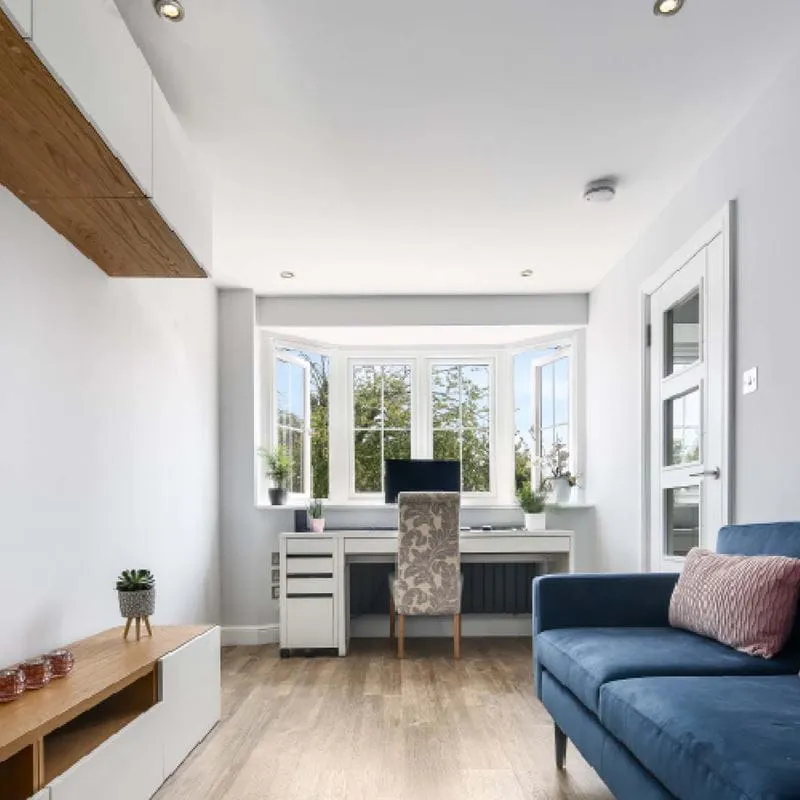
Once you convert the garage into an office, bedroom, playroom, lounge or similar, it becomes living space. A garage conversion needs Building Regulations attention, including ventilation under Part F. New windows or doors in that converted room normally need proper background ventilation (trickle vents or another accepted strategy), plus purge ventilation such as openable windows, and the wider package of insulation, electrics and fire separation that conversion work brings. See Amber’s garage conversions across Norfolk, Suffolk and Cambridgeshire.
3. Space already used as living space
If the garage is already a gym, office, annexe or family room – even if the door still looks like a garage door from the street – treat it as habitable for ventilation purposes. Replacement windows should follow the existing-dwelling guidance in Section 3 of Approved Document F, unless another compliant ventilation strategy is agreed with building control.
What happens when you replace windows in habitable rooms
For existing dwellings in England, Approved Document F Section 3 covers replacing windows. In broad terms:
- If the old windows had background ventilators, the replacements should include controllable background ventilators that are not smaller than the originals.
- If the old windows had no background ventilators, replacements often need new ones so ventilation is no worse than before – commonly a minimum equivalent area of 8000mm2 for habitable rooms and kitchens, and 4000mm2 for bathrooms (with or without a toilet), unless continuous mechanical extract or another accepted approach is used.
- Night latches on windows are not treated as adequate background ventilation.
Those figures apply to habitable rooms and wet rooms in the dwelling – not to a garage that still qualifies for the F1 garage exemption. Equivalent areas are marked on the ventilators so building control can check them.
East Anglia examples from Amber jobs
These projects show windows and converted spaces Amber has fitted locally. They are not a substitute for checking your own garage use against Part F.
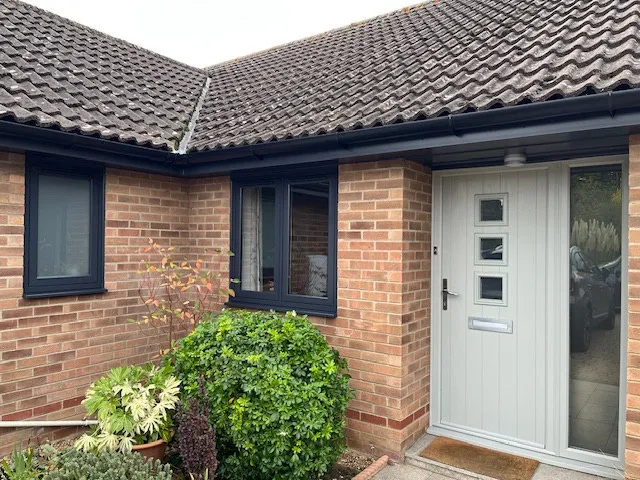
Wymondham NR18 – anthracite flush casements with trickle vents. A 1970s bungalow had six anthracite grey flush casement windows fitted, including a bow, with matching handles and trickle vents where the rooms required them. Full story: Wymondham NR18 flush window replacement.
Filby NR29 – anthracite flush upgrade. A Broads-edge family home near Filby moved from tired timber casements to anthracite flush uPVC with discreetly integrated trickle vents to meet current Building Regulations on the living elevations.
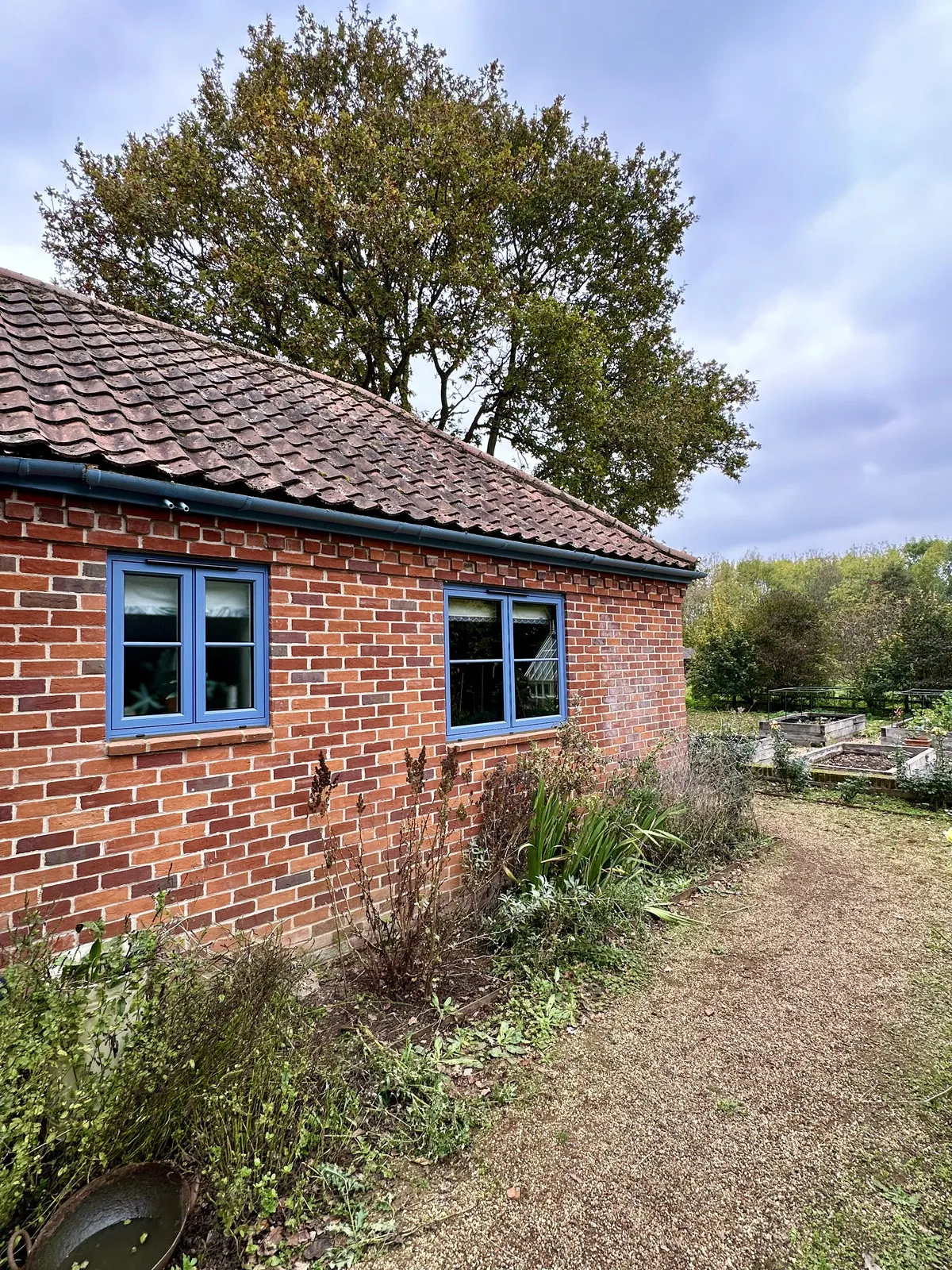
Mulbarton NR14 – aluminium flush with visible trickle vents. Duck-egg aluminium flush casements on a brick wing south of Norwich show how a slim external trickle-vent hood sits in a modern flush frame when the room is habitable.
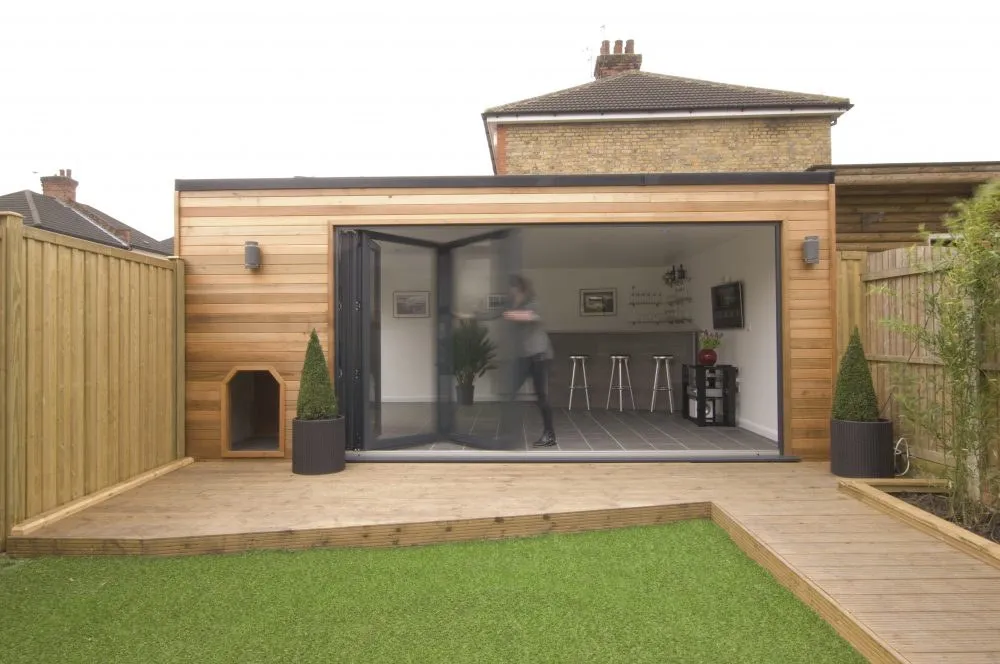
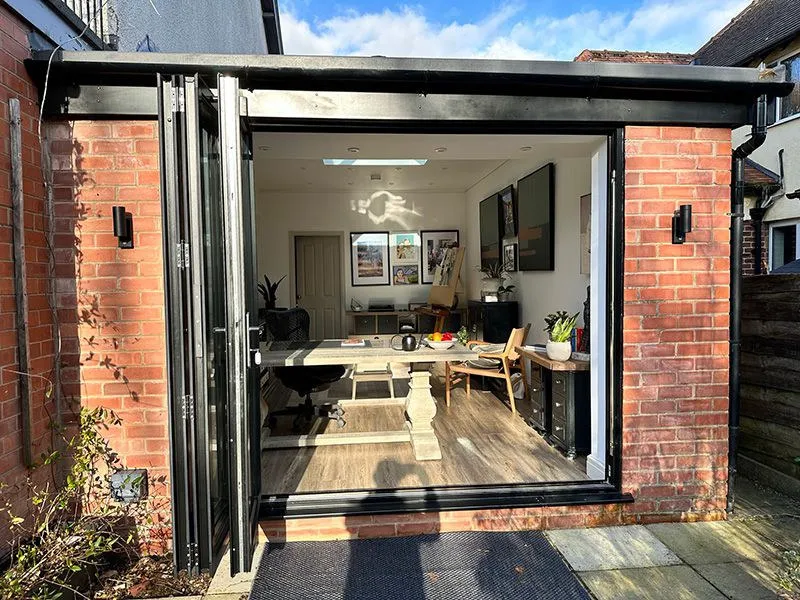
Drayton NR8 – garage conversion with cladding and bifolds. Converted garage living space with cladding and bifold doors is the opposite case to a cold store: once it is a room, ventilation and the wider Building Regulations package apply. Explore options on Amber’s garage conversion page.
Practical checklist before you order garage windows
- Confirm how the space is used today: car or storage only, or already lived in?
- Say if a conversion is planned now or later – that changes Part F and often Parts L, B and P as well.
- Note whether existing garage windows already have trickle vents.
- On a whole-house window job, list garage openings separately so the survey can treat them correctly.
- Ask building control or your FENSA-registered installer if the use of the space is borderline.
- For conversions, plan insulation, heating, electrics and ventilation together – not windows alone.
What Amber does on survey
On a home survey Amber records which openings serve habitable rooms, wet rooms, stores and true garages. That decides where background ventilators are specified. Quotes are fixed and written after survey. FENSA registration covers replacement windows in existing dwellings where the competent-person route applies; garage conversions and material changes of use are handled with the right building-control route for the job.
Key takeaways
- Uninhabitable garages used solely with a single dwelling sit outside requirement F1 under Approved Document F (England).
- Habitable rooms and garage conversions need proper ventilation – often including trickle vents on new windows.
- Do not copy habitable-room vent sizes onto a cold garage by default – and do not skip vents on a room that is already lived in.
- Soften any borderline call with your surveyor and building control.
- East Anglia homes from Broads villages to city suburbs follow the same England Part F framework; survey still decides the openings.
If you are renewing garage windows in Norwich, Wymondham, Filby, Mulbarton, Drayton, Dereham, Ipswich, Bury St Edmunds, Cambridge or elsewhere in Norfolk, Suffolk and Cambridgeshire, book from the Norwich showroom or through the windows and garage-conversion pages above.
Frequently asked questions
Do uninhabitable garage windows need trickle vents under Part F?
Often no. Approved Document F Volume 1 (England) says requirement F1 does not apply to a garage used solely in connection with a single dwelling, or to spaces used solely for storage. Cold garages used only for a car or storage are not treated like habitable rooms. Confirm use on survey and with building control if unsure. This is guidance, not absolute legal advice for every plot.
What if we are converting the garage into a room?
Then Part F applies as for living space. A garage conversion needs Building Regulations, including background ventilation (often trickle vents in new windows or doors), purge ventilation, and the wider insulation and services package. See Amber’s garage conversion service for Norfolk, Suffolk and Cambridgeshire.
The garage is already used as an office or gym – do we need vents?
Treat it as habitable. If people use it as a room, replacement windows should follow the existing-dwelling window-replacement guidance in Approved Document F Section 3 unless another compliant ventilation strategy is agreed with building control.
What trickle vent sizes apply to habitable rooms when windows are replaced?
Where new background ventilators are needed in existing dwellings, Approved Document F commonly points to minimum equivalent areas of 8000mm2 for habitable rooms and kitchens, and 4000mm2 for bathrooms (with or without a toilet), unless continuous mechanical extract or another accepted approach applies. Equivalent area is not the same as free area. Exact specification is confirmed on survey.
Do night latches count as trickle vents?
No. Approved Document F states that a window night-latch position is not adequate for background ventilation, because of draughts, security and the difficulty of measuring equivalent area.
Does FENSA cover garage window replacements?
FENSA-registered installers can self-certify many replacement windows in existing dwellings. Garage conversions and some material changes of use need a building-control route beyond a simple window swap. Amber advises which route fits after survey.
Do Amber jobs in Wymondham, Filby and Mulbarton include trickle vents?
Where openings serve habitable rooms, yes – for example anthracite flush casements with trickle vents at Wymondham NR18 and Filby NR29, and aluminium flush casements with visible trickle-vent hoods at Mulbarton NR14. Cold garage-only openings are assessed separately against Part F.
Can Amber advise across Norfolk, Suffolk and Cambridgeshire?
Yes. Surveys and fitting run from the Norwich showroom across Norfolk, Suffolk and Cambridgeshire, including Norwich, Wymondham, Filby, Mulbarton, Drayton, Dereham, Ipswich, Bury St Edmunds and Cambridge.
Book a survey: replacement windows and garage conversions across East Anglia.